


Original
€84,95€84,95€72,21
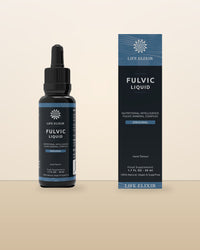
The essential. Sour, the way fulvic acid should taste.
Fulvic acid · Late Eocene
Fulvic acid from a fossil plant kingdom, 28 to 34 million years old. Tested per batch.
Bestsellers
The essential. Sour, the way fulvic acid should taste.
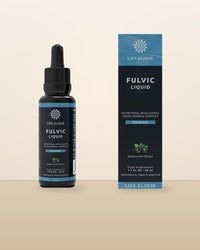
The same source, with blackcurrant. For those who prefer a softer taste.
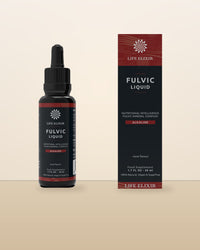
Buffered for a milder, less sour taste.
No drops, no taste. The same source, in your bag.
Swipe for all products →
Value pack
Original, Blackcurrant and Alkaline. Ten months of your daily ritual. Shipped free.
Build your own pack
Pick 3 bottles of 50 ml, in any combination of flavours. €37,90 comes off automatically in your cart.
Pick 3 more bottles
One-time purchase. The discount applies once per order.
Fulvic Sport
Morning and Evening: two bottles for your morning and evening routine.
View Fulvic Sport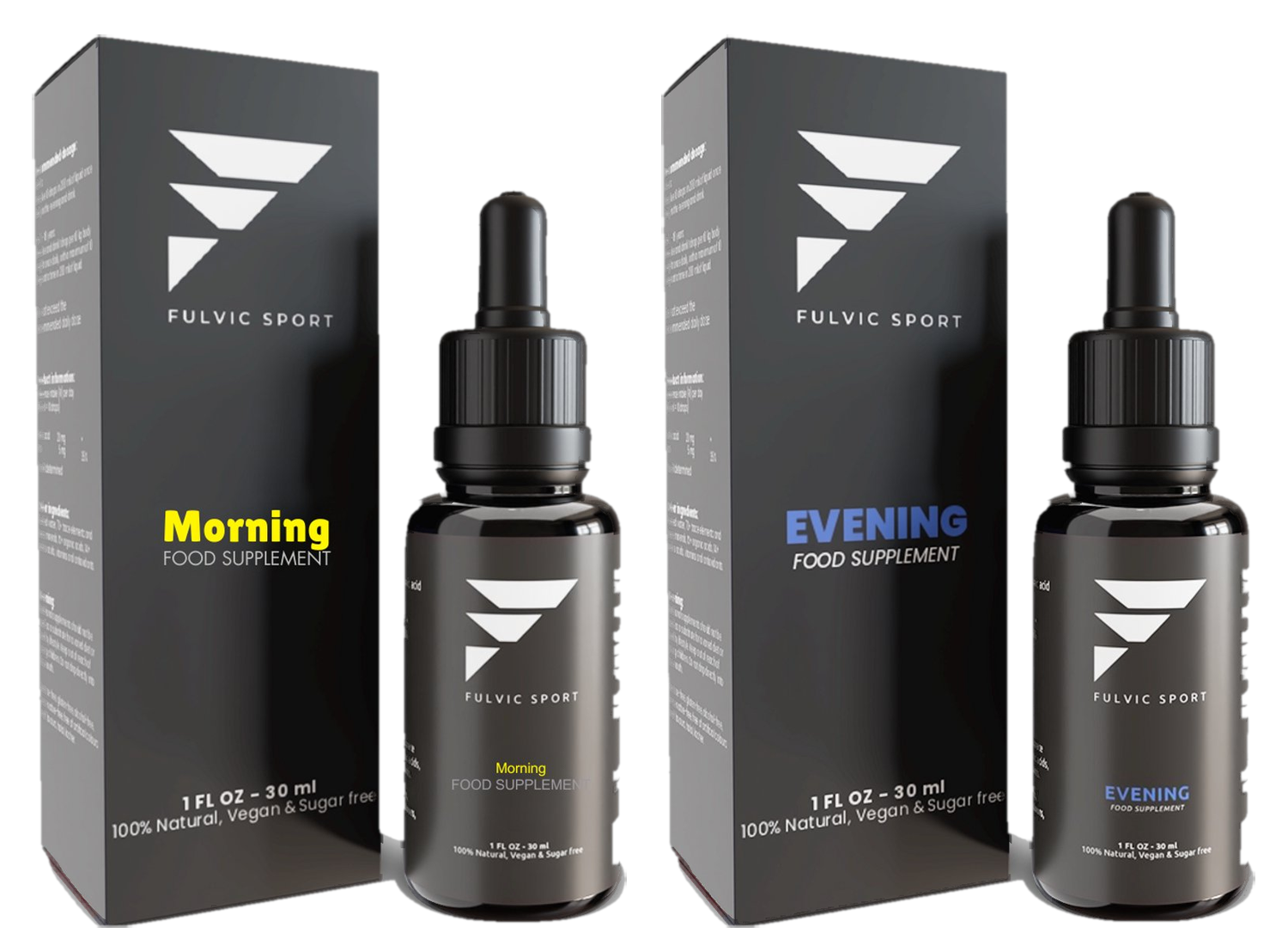
How do you use it?
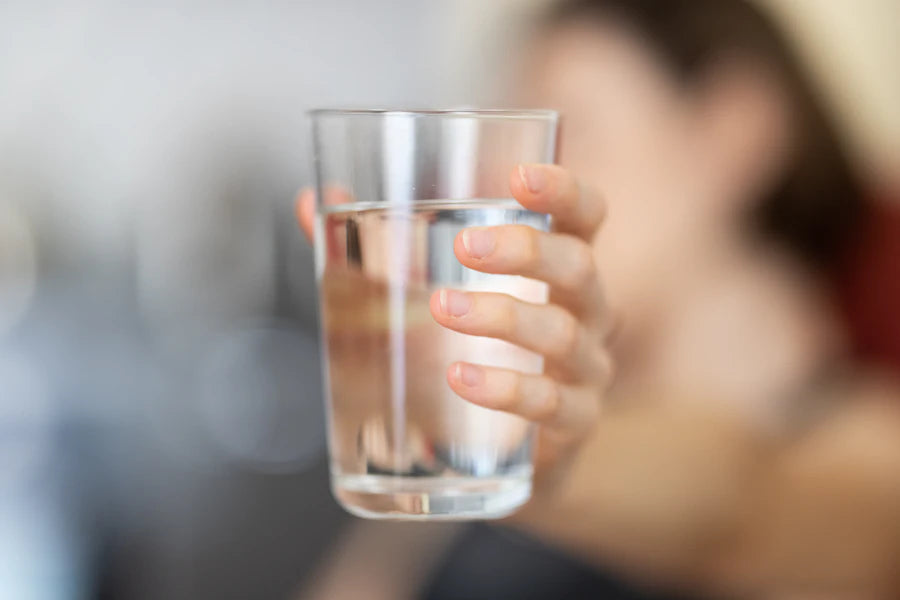

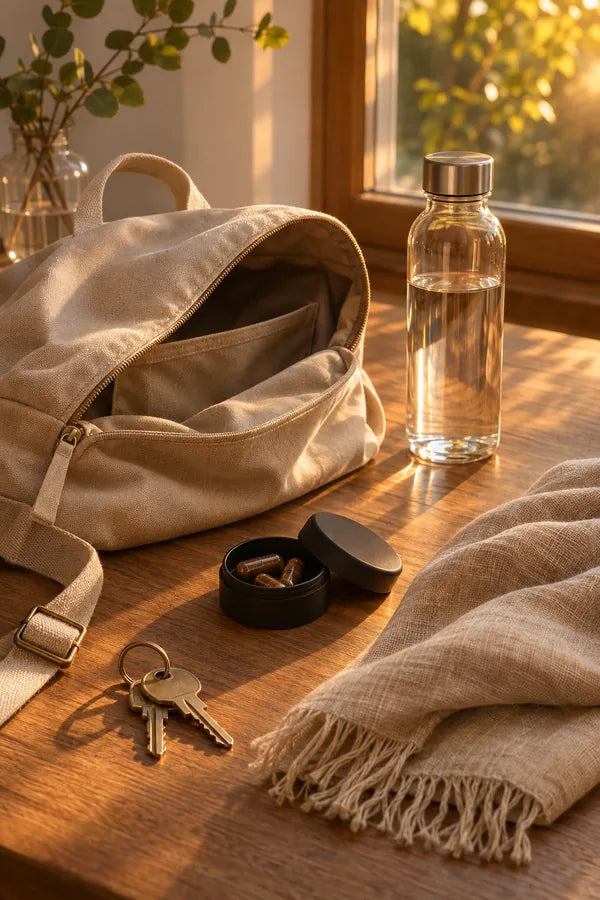
Also nice in tea, juice or yoghurt. Choose chlorine-free water for the best taste.

Ritual
10 drops per day, maximum 20 drops per day, in a glass of chlorine-free water. Try it here.
Children: 1 drop per 10 kg of body weight, maximum twice a day. For children, consult a doctor or pharmacist first.
Do not exceed the maximum daily dose of 20 drops. If you take medication, are pregnant or breastfeeding, consult your doctor or pharmacist first.
Product finder · 2 questions
1. How do you prefer to take it?
2. Which taste?
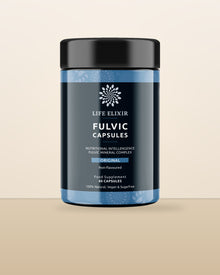
No drops, no taste. The same source, in your bag.
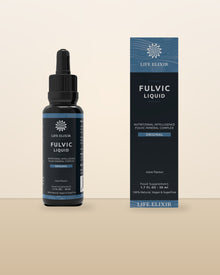
The essential. Sour, the way fulvic acid should taste.
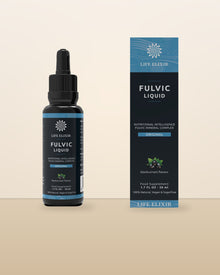
The same source, with blackcurrant. For those who prefer a softer taste.
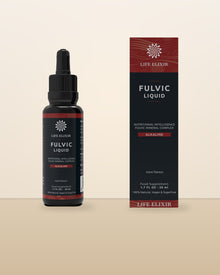
Buffered for a milder, less sour taste.
Open lab
The batch number is on the bottom of your bottle. Enter it and see what’s in it, what’s not in it, and when it was tested.
| Physical data | Result | Limit |
|---|---|---|
| pH | 2,06 | 1,8 – 2,3 |
| Specific gravity | 1,09 g/cc | 1,05 – 1,20 |
| Dissolved solids | 14,6% | 2 – 16% |
| Water activity | 0,906 Aw | 0,90 – 0,95 |
| Fulvic acid | 7,31% | 3 – 7,5% |
| Minerals and trace elements | Result | Limit |
|---|---|---|
| Calcium (Ca) | 330 ppm | < 6.500 |
| Iron (Fe) | 9.040 ppm | 8.000 – 20.000 |
| Magnesium (Mg) | 640 ppm | 500 – 10.000 |
| Sodium (Na) | 3.760 ppm | 1.000 – 8.000 |
| Sulphur (S) | 11.600 ppm | 10.000 – 50.000 |
| Aluminium (Al) | 2.310 ppm | < 2.500 |
| Heavy metals | Result | Limit |
|---|---|---|
| Arsenic (As) | 1,17 ppm | < 10 |
| Cadmium (Cd) | 0,256 ppm | < 1 |
| Lead (Pb) | 0,021 ppm | < 2 |
| Mercury (Hg) | < 0,001 ppm | < 0,10 |
| Microbiology | Result | Limit |
|---|---|---|
| Total plate count | < 10 CFU/g | < 10.000 |
| Coliforms | < 3 MPN/g | < 3 |
| E. coli | < 3 MPN/g | < 3 |
| Salmonella | Absent | Absent per 10 g |
| Staphylococcus aureus | Absent | Absent per 10 g |
| Yeasts | < 10 CFU/g | < 100 |
| Moulds | < 10 CFU/g | < 100 |
| Physical data | Result | Limit |
|---|---|---|
| pH | 11,54 | 11,0 – 12,3 |
| Soortelijk gewicht (20 °C) | 1,05 g/cc | 1,00 – 1,20 |
| Uiterlijk | Bruin-zwarte vloeistof | Voldoet |
| Fulvinezuur (LAMAR) | 5,21% | 2 – 6% |
| Minerals and trace elements | Result | Limit |
|---|---|---|
| Calcium (Ca) | 98,7 ppm | 50 – 5.000 |
| Magnesium (Mg) | 51,4 ppm | 25 – 1.500 |
| Potassium (K) | 8.199 ppm | 7.000 – 20.000 |
| Sodium (Na) | 4.951 ppm | 2.000 – 5.000 |
| Sulphur (S) | 5.903 ppm | 5.000 – 11.000 |
| Heavy metals | Result | Limit |
|---|---|---|
| Arsenic (As) | 0,059 ppm | < 2 |
| Cadmium (Cd) | 0,018 ppm | < 0,5 |
| Lead (Pb) | 0,012 ppm | < 2 |
| Mercury (Hg) | < 0,001 ppm | < 0,10 |
| Microbiology | Result | Limit |
|---|---|---|
| Total plate count | < 10 CFU/g | < 10.000 |
| Coliforms | < 3 MPN/g | < 10 |
| E. coli | < 3 MPN/g | < 10 |
| Salmonella | Absent | Absent per 10 g |
| Staphylococcus aureus | Absent | Absent per 10 g |
| Yeasts | < 10 CFU/g | < 1.000 |
| Moulds | < 10 CFU/g | < 1.000 |
| Physical data | Result | Limit |
|---|---|---|
| Solubility | 100% | 100% |
| pH (5% solution) | 4,49 | 4,0 – 5,0 |
| Water activity | 0,190 Aw | < 0,86 |
| Fulvic acid | 66,46% | > 35% |
| Polyphenols | 7,3% | 5 – 10% |
| Minerals and trace elements | Result | Limit |
|---|---|---|
| Calcium (Ca) | 1.050 ppm | 500 – 5.000 |
| Iron (Fe) | 6.820 ppm | 1.500 – 10.000 |
| Magnesium (Mg) | 808 ppm | 100 – 4.500 |
| Potassium (K) | 557 ppm | 100 – 5.000 |
| Sodium (Na) | 52.900 ppm | 10.000 – 60.000 |
| Heavy metals | Result | Limit |
|---|---|---|
| Arsenic (As) | 0,678 ppm | < 2 |
| Cadmium (Cd) | 0,213 ppm | < 0,5 |
| Lead (Pb) | 0,037 ppm | < 2 |
| Mercury (Hg) | 0,003 ppm | < 0,10 |
| Microbiology | Result | Limit |
|---|---|---|
| Total plate count | < 10 CFU/g | < 10.000 |
| Coliforms | < 3 MPN/g | < 3 |
| E. coli | < 3 MPN/g | < 3 |
| Salmonella | Absent | Absent per 10 g |
| Staphylococcus aureus | Absent | Absent per 10 g |
| Yeasts | < 10 CFU/g | < 100 |
| Moulds | < 10 CFU/g | < 100 |
n.d. = not detected · ppm = mg/kg
The source
A fossil plant kingdom, compressed into a layer full of organic acids and trace elements.
View the productsOrigin
A sealed deposit, around 34 million years old, with plant material of both land and marine origin.
The raw material is given time to cure before it is processed. Harvested slowly, without rushing.
Purified water draws out the fulvic acids, minerals and polyphenols. No phosphoric or sulphuric acid, no harsh solvents.
In a cGMP-certified facility, to strict standards for food supplements.
An independent lab measures the fulvic acid content, heavy metals and microbes.
In glass bottles with a batch number. That number links your bottle to its lab report.
Compare
Fulvic acid forms slowly: soil microbes break plant remains down into humus, and in it this small, water-soluble substance forms over thousands to millions of years. The older and better sealed the layer, the more consistent the source. In Asia it has been known for centuries as part of shilajit, a natural resin from Ayurveda.
Fulvic acid or shilajit?
Shilajit is a traditional resin from mountain regions. Its composition varies by region, altitude and processing. Fulvic acid is a clearly defined group of organic acids that you can measure per batch.
Buyer’s guide
Not all fulvic is the same. Use these six points to compare any brand, including ours.
Check your batch →Knowledge
 1 min readWhat is fulvic acid?
 1 min readWhy the age of the source matters
 1 min readHow to read a lab report
What does research say?
There are over a thousand scientific publications on fulvic acid, but most research has been done in the lab. Studies in humans are still scarce. That’s why we don’t promise any effects. We do show you what’s out there, so you can read it yourself.
10 drops per day in a glass of chlorine-free water or juice, maximum 20 drops per day. One 50 ml bottle lasts 100 days.
From €99 in the Netherlands, Belgium, Germany, France, Italy, Slovenia, Austria, Spain, Denmark and Luxembourg. From €150 in most other European countries, such as Sweden, Poland, Portugal, Ireland, Switzerland, Norway, the United Kingdom, Lithuania, Latvia, Malta and Cyprus. From €200 in Eastern and Southeastern Europe, such as Greece, Croatia, Romania, Bulgaria and Estonia. Other countries have a fixed rate. Shipping costs per country are listed in our shipping policy, and your cart shows how much more you need for free shipping. Unopened products can be returned within 30 days.
You receive a new bottle every 14 weeks with 15% off. Pause or cancel any time, with no minimum term.
No. Shilajit is a traditional resin that contains fulvic acid among other things, but its composition varies greatly. Life Elixir is fulvic acid with a fixed, measurable composition per batch.


